
RCA Gives Back
Eyes on Eswatini – Reflections from Dr. Brian C. Joondeph’s First Medical Mission Trip
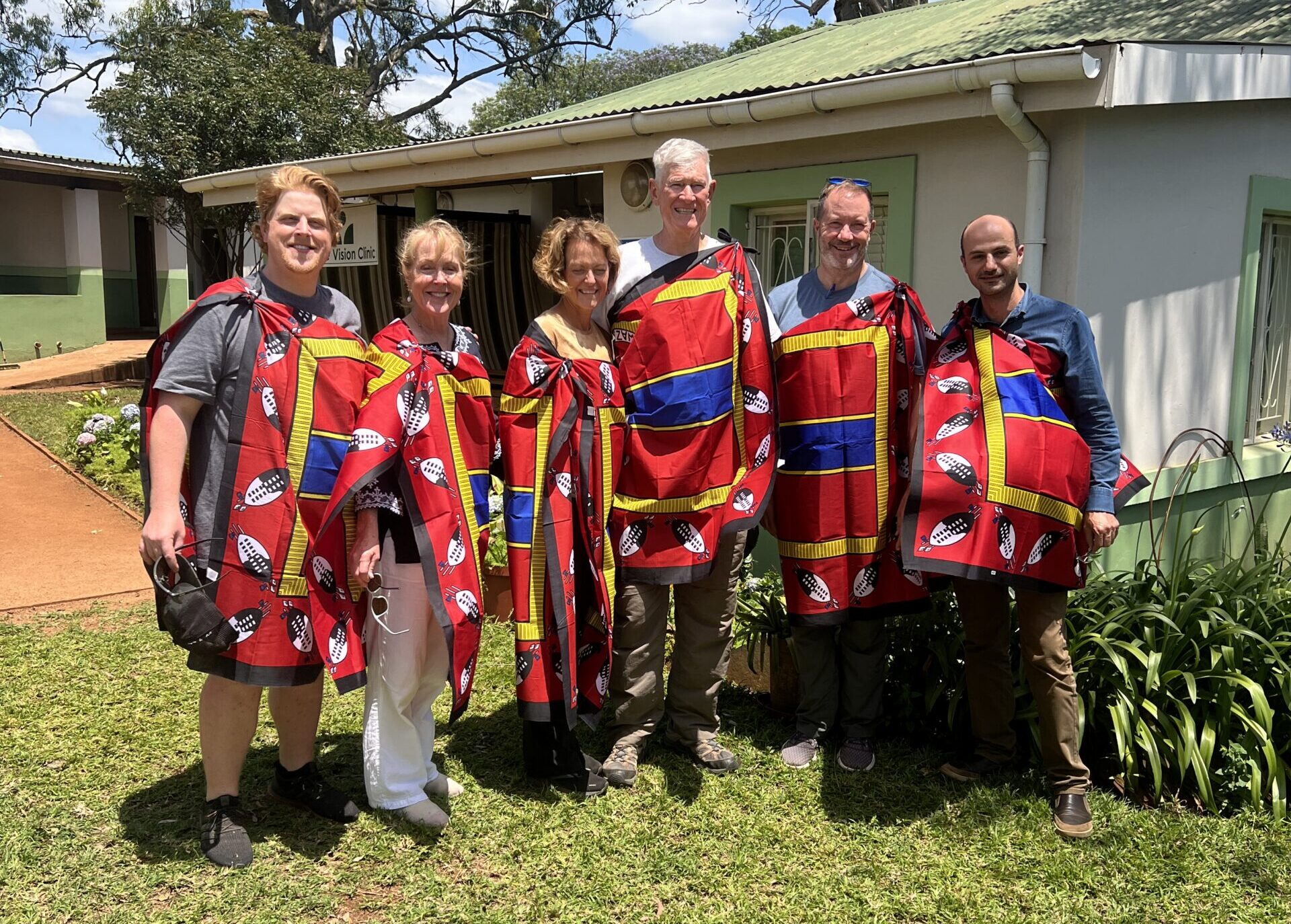
This past October, Dr. Brian C. Joondeph joined a Christian Ophthalmology Society medical mission trip to Eswatini, a small, landlocked nation surrounded by South Africa and formerly known as Swaziland. His group was graciously hosted by local ophthalmologist Dr. Jono Pons at his family’s Mabuda Guest Farm, which served as both lodging and a home base for clinical work.
Their team consisted of four ophthalmologists – three from the United States and one from Australia – who all made the long journey with a shared purpose: to restore sight to those with limited access to eye care. They staffed local clinics, evaluated patients, and traveled by helicopter to remote villages to screen residents and identify candidates for surgery.
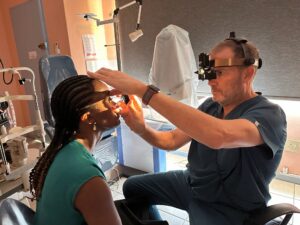 Beyond direct patient care, the mission emphasized teaching and capacity building. The group worked closely with local physicians, ophthalmology residents, and international medical students. Dr. Joondeph’s primary role involved retina consultation – advising on diagnostic dilemmas, triaging what could be managed locally, and identifying conditions beyond the scope of Eswatini’s limited retinal resources. The contrast with U.S. retina care was stark: limited imaging, constrained treatment options, sporadic access to injection therapies, and virtually no vitreoretinal surgical capabilities. Yet, the dedication of the local clinicians was inspiring, says Dr. Joondeph.
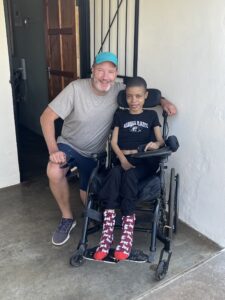
Two group family members joined their group and spent the week renovating a home for a quadriplegic woman in the community. While evenings were spent sharing meals, reflecting on the day’s encounters, and joining in prayer – important time to center themselves and give thanks for the opportunity to serve.
Dr. Joondeph’s trip was not without moments of rest and renewal. They visited nearby game reserves, including one overnight stay where they encouraged Afrida’s remarkable wildlife – hippos, rhinos, elephants, giraffes, warthogs, lions, and even a large brown recluse spider that seemed unbothered by their presence, a feeling that was not mutual. On the way home, Dr. Joondeph made a brief stop in Soweto, the historic center of the anti-apartheid movement, and Victoria Falls, one of the natural wonders of the world.
A Change in Perspective
 In American retina practices, they often face the frustrations of modern healthcare – insurance barriers, step-therapy delays, preauthorization hurdles, and the inherent unpredictability of clinical medicine. Yet, Dr. Joondeph believes that U.S. physicians are fortunate to practice in a system where high-quality care is accessible to most patients.
For much of the world, this is not the case. Dr. Joondeph’s time in Eswatini was a reminder of the profound disparities in eye care delivery globally – deficits in equipment, training, surgical capacity, and affordability.
Dr. Joondeph is profoundly grateful for the blessings in his own life: a fulfilling career, a supportive family, and opportunities that are taken for granted. The blessings became clearer after experiencing profound personal loss when his wife passed away in 2021 following an extended illness from COVID. Her message to him was simple: “Do good.” Participating in mission work was one way Dr. Joondeph honors her memory.
Whether building a home in Tijuana with his family and their church or performing eye surgery in Africa, he views these experiences as opportunities to give back – not to those who already share their privileges, but to those with the least access and the greatest need.
Lessons in Retina Training—Dr. Eric Hansen’s Philanthropic Trip in Eritrea
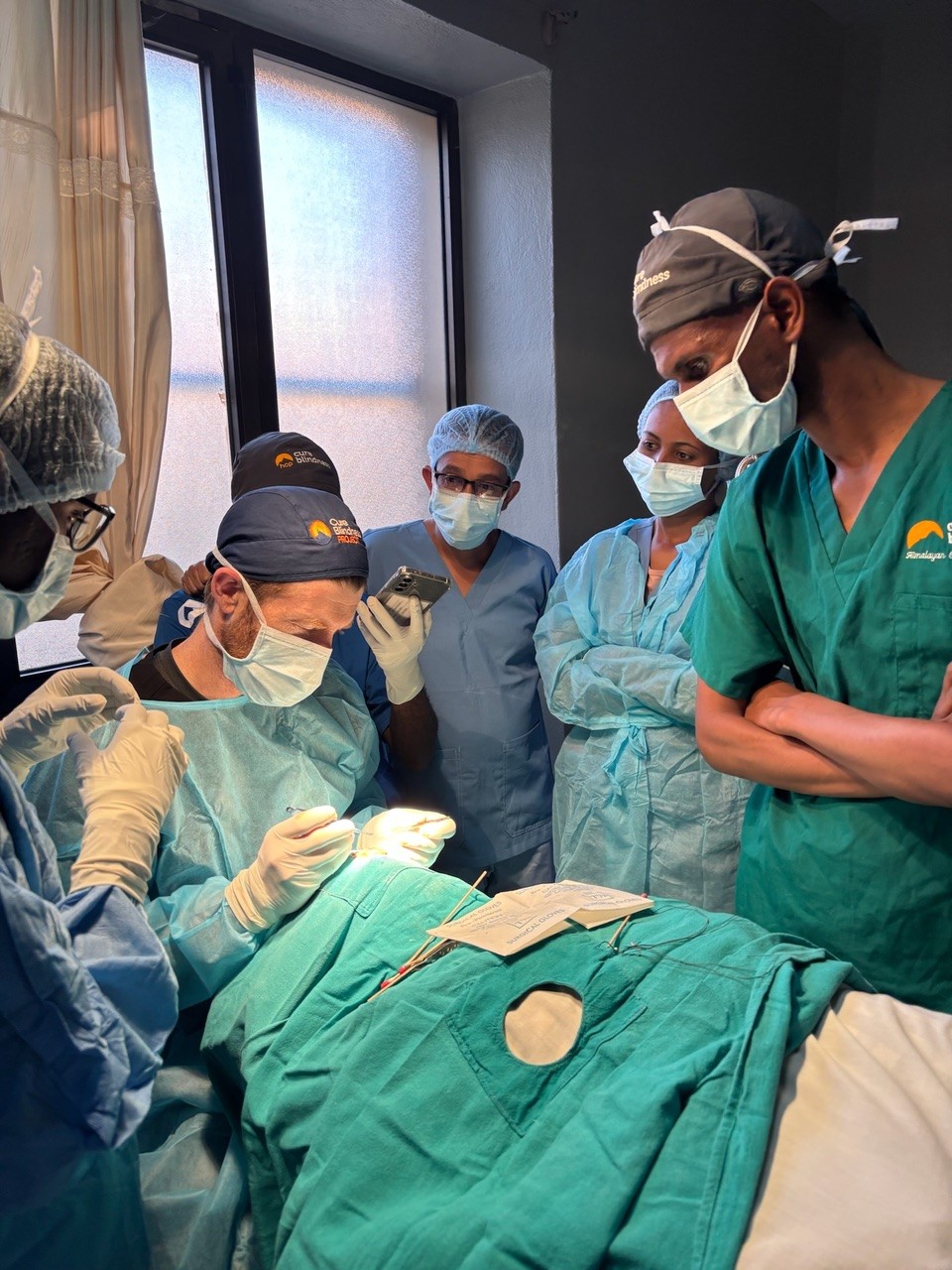 In December 2025, Dr. Eric Hansen traveled to Asmara together with Sean Collon (who is joining Pacific Northwest Retina in 2026) and Amen Nigussie for a week of teaching and collaboration at Berhan Aiyni National Referral Eye Hospital, Eritrea’s only national eye center. Eritrea’s ophthalmology residency program – now in only its third year – includes eight residents and is supported by attending ophthalmologist, Dr. Eyob. There are only four to five practicing ophthalmologists nationwide, with no subspecialists, and all are located in the capital city of Asmara. The hospital does not have a vitreoretinal service and serves a population with advanced diabetic eye disease as well as a growing backlog of surgical retina disease. This visit marked Cure Blindness Project’s inaugural vitreoretinal hospital-based training program and the continuation of an emerging long-term partnership.
Program objectives were to introduce foundational vitreoretinal skills, assess institutional needs, and identify young ophthalmologists interested in pursuing retina specialization. They also aimed to lay the groundwork for a sustainable, hospital- based vitreoretinal service, including site preparation for an extended visit by a Nepalese retina surgeon scheduled to arrive in early 2026.
Over six intensive days, Dr. Hansen and the team worked side-by-side with residents and faculty, combining hands-on surgical teaching with focused lectures. They assembled and activated a Faros vitrectomy platform procured by the Cure Blindness Project, establishing vitrectomy capability for the first time at Berhan Aiyni. Hospital faculty and residents participated in key operative steps—trocar placement, anterior and core vitrectomy, scleral buckling, retinal laser, and cryotherapy—many for the first time. Residents documented equipment operations and surgical procedures for future training, and several residents completed their first retinal laser treatments under supervision.
Outside the operating room, the group taught core retina principles: retinal detachment repair, diabetic retinopathy, macular degeneration, retinal imaging, and the realities of delivering subspecialty care in low-resource settings. They emphasized indirect ophthalmoscopy and scleral depression, skills the residents are now equipped to continue developing with newly available instruments.
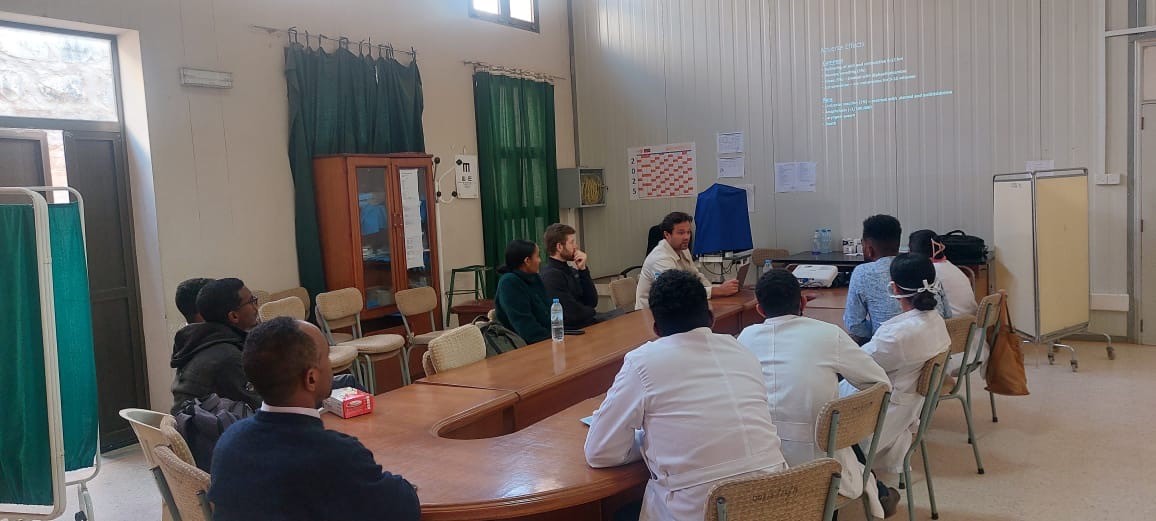
This mission was organized in partnership with Cure Blindness Project which coordinated the hospital-based training and supports Eritrea through equipment procurement, supply chain development, and long-term planning for future training objectives. Dr. Hansen has worked with Cure Blindness Project (formerly Himalayan Cataract Project) for 10 years since he was originally Dr. Geoff Tabin’s fellow. Several other RCA physicians have also partnered with Cure Blindness throughout the world in their broad efforts to build local eyecare capacity and reduce the burden of needless blindness.
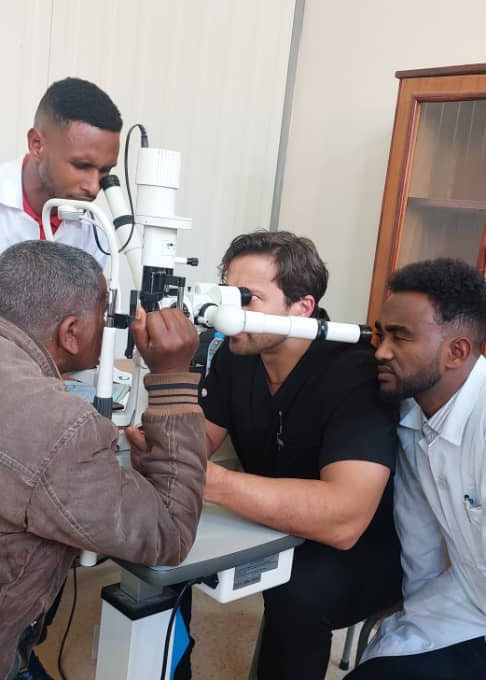 Dr. Hansen and the team left Asmara with a shared understanding of both the challenges and the promise ahead. Eritrea has earnest, committed residents, engaged faculty, and a government-funded healthcare system that minimizes patient financial barriers once specialty care is available. What’s needed now is sustained mentorship, essential equipment, and structured training pathways. With continued partnership, they believe Eritrea can build its own vitreoretinal service and provide first-rate medical and surgical retina care to the population.